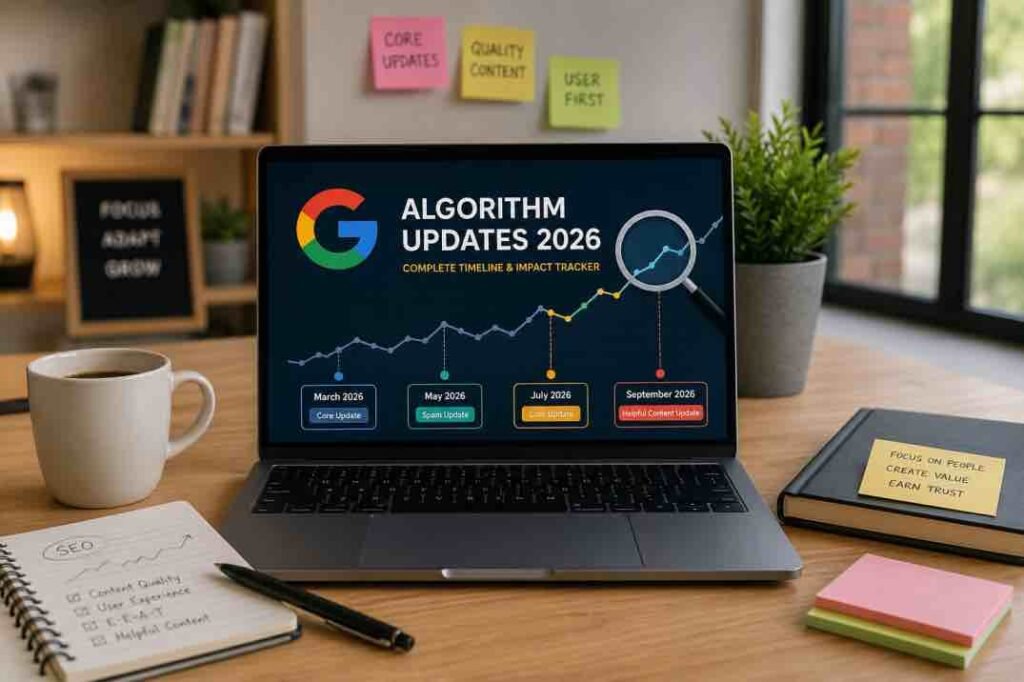
Google rolls out algorithm updates constantly, but a handful of major, named updates each year genuinely reshape search results. Tracking these – and understanding what each one actually rewards or penalizes – helps businesses respond strategically instead of reactively.
Why Tracking Algorithm Updates Matters
A sudden ranking drop is far easier to diagnose and address when you know exactly which update coincided with it, and what that specific update was designed to target.
Types of Google Algorithm Updates
Core Updates
Broad updates affecting overall content quality assessment across all of Google Search, typically rolled out several times per year and often causing the most noticeable ranking shifts.
Spam Updates
Targeted specifically at manipulative tactics – link schemes, low-quality auto-generated content, and other spam patterns.
Helpful Content Signals
Now integrated into core ranking systems, continuously evaluating whether content genuinely serves user needs versus being created primarily for search engines.
Want to know if a recent update affected your rankings? SoftMantra’s technical SEO audit can diagnose this.
How to Respond When an Update Affects You
- Avoid panic-driven, drastic changes immediately after a ranking drop
- Review official Google guidance related to the specific update
- Audit affected pages for genuine content quality and E-E-A-T gaps
- Give changes time to be re-evaluated, since recovery is rarely instant
Patterns Across Recent Updates
Recent updates consistently reward genuine expertise, original insight, and clear user value, while penalizing thin, AI-generated content with no real added perspective, and manipulative link-building practices.
Need help auditing your content against current quality standards? Our content marketing team can assess this.
Common Mistakes When Responding to Updates
- Making sweeping, panicked changes based on incomplete information
- Assuming every ranking fluctuation is tied to a major named update
- Ignoring official Google communications about what an update actually targets
How to Stay Informed Going Forward
Monitor Google’s official Search Central blog and Search Console notifications directly, rather than relying solely on secondhand commentary, which can sometimes misrepresent what an update actually changed.
Why Ongoing Monitoring Requires Real Expertise
Distinguishing a genuine algorithm impact from normal ranking fluctuation takes experience. SoftMantra actively monitors algorithm changes for our clients as part of our ongoing SEO service, backed by 15+ years of tracking these patterns from our Delhi NCR base.
Frequently Asked Questions
Q: How often does Google update its search algorithm?
Google makes small adjustments constantly, but rolls out a smaller number of major, named updates – like core updates – several times throughout the year.
Q: How do I know if a ranking drop was caused by an algorithm update?
Compare the timing of your ranking drop against Google’s official update announcements, and check whether similar sites in your industry experienced comparable shifts.
Q: How long does recovery from an algorithm update typically take?
This varies significantly, but genuine content quality improvements typically take one to three months to be fully re-evaluated and reflected in rankings.
Q: Should I make immediate changes after every algorithm update?
No, it is generally better to first understand what the specific update targeted, and only then make thoughtful, quality-focused changes rather than reactive, sweeping edits.
Q: Do algorithm updates affect all industries equally?
No, some updates target specific content types or quality issues more heavily, meaning impact can vary significantly by industry and existing content quality.
Staying informed about algorithm updates helps you respond strategically rather than reactively. Talk to SoftMantra about ongoing algorithm monitoring and quality-focused SEO for your website.